


Confirm the Construction Before Production Begins
Soletrivo Slippers supports importers, wholesalers, private label brands and hospitality buyers with production arrangements matched to the selected slipper. Molded slides, assembled sandals and textile indoor slippers follow different manufacturing routes.
The starting point is an approved specification covering materials, dimensions, colors, construction, branding and packaging. We review outstanding sample decisions and component availability before confirming the production schedule. Relevant in-house and cooperating-factory responsibilities are clarified for the product.
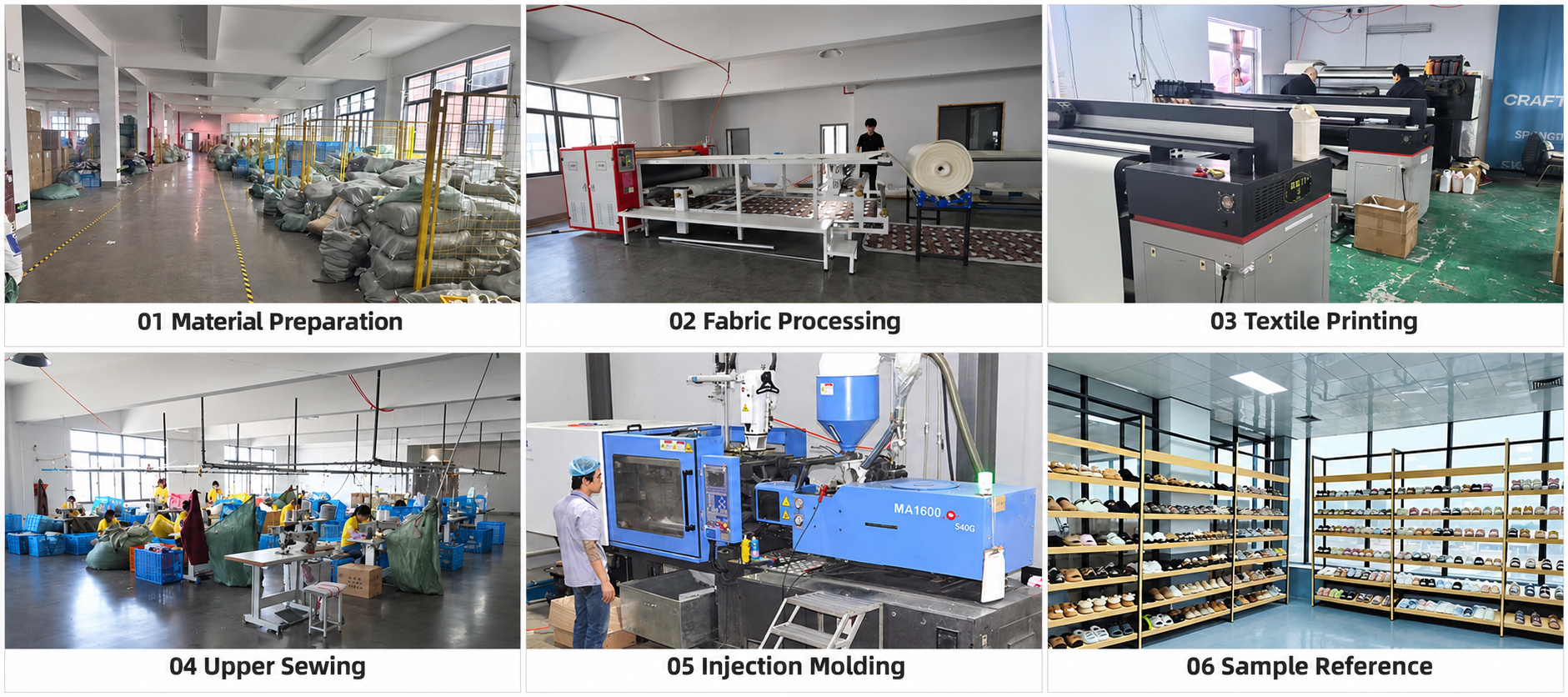
Prepare Materials and Matching Components
Upper fabrics, linings, cushioning and sole components are checked against the agreed references. Preparation must account for material shade, thickness, texture and the required size assortment.
For plush styles, pile direction affects the appearance of paired uppers. Hotel slippers require compatible upper, footbed and sole dimensions. Molded styles need the agreed material and tooling route. Our material selection and preparation review establishes these requirements before processing.
 Cut, Sew or Mold According to the Style
Textile constructions use the approved patterns to prepare upper, lining and other applicable pieces. Cutting direction, seam allowances and alignment influence the finished shape. Sewing may include joining sections, attaching lining and binding edges.
Molded products follow the applicable forming route instead of textile upper sewing. Tooling, component dimensions and finished appearance need confirmation for that model. Changes to a sole profile or strap structure may require further development rather than a direct production adjustment.
The slipper sample development stage helps resolve these construction decisions before bulk work proceeds.
Apply Branding at the Appropriate Stage
Printing, embroidery and woven labels may need application before upper assembly limits access. Molded branding depends on the agreed component and tooling arrangement.
Confirm artwork versions, logo dimensions, direction and placement before the relevant operation. Early checks should compare the application with the approved reference so an incorrect logo is not repeated through the batch. Material or artwork changes require review because they can affect the chosen process.
Assemble Uppers, Straps and Soles
Assembly follows the selected construction. Applicable operations may include fitting straps, joining upper and footbed layers, stitching or bonding the upper to the sole.
Component alignment and size matching are checked before attachment. For bonded constructions, material compatibility and the specified preparation influence the result. One-piece molded styles do not require the same upper-to-sole bonding sequence. Review the relevant sole production and bonding requirements for the selected model.
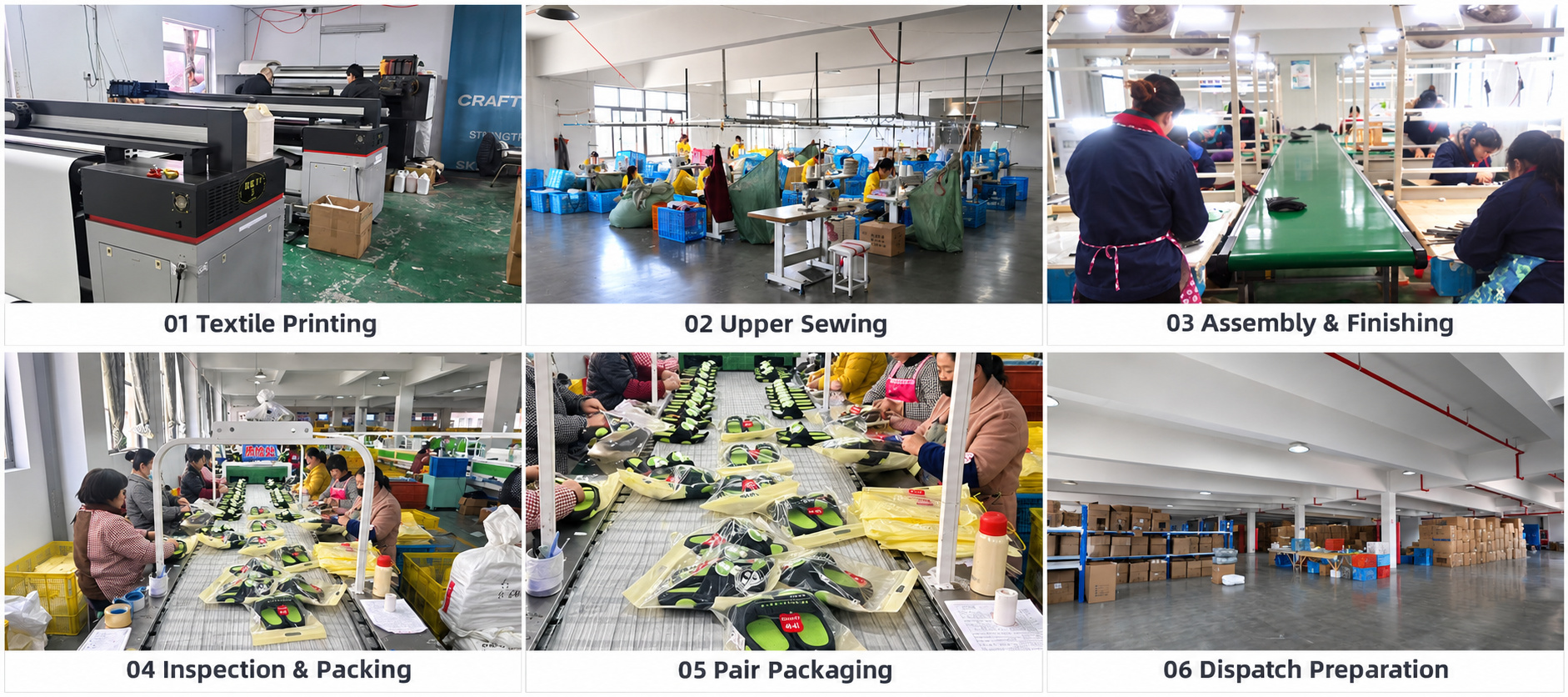
Finish and Inspect Completed Pairs
Finishing addresses relevant trimming, thread ends, surface cleanliness and presentation. Left and right slippers are matched for size, shade, shape and branding direction.
Inspection uses the approved sample and written requirements. Applicable checks cover dimensions, stitching, attachment, appearance and decoration. Measurement methods, acceptance criteria and any functional tests should be agreed in advance. Identified discrepancies require a disposition before affected goods proceed to packing.
 Pack Against the Order Instructions
Packing instructions identify bags, bands or boxes, size and color assortments, labels and pairs per carton. The packed arrangement should protect the approved shape without unnecessary compression.
Carton counts and shipping marks are checked against the purchase order. Carton dimensions, weights, dispatch arrangements and agreed documents are confirmed during packaging and export preparation.
Send Your Production Requirements
Share the selected style, reference sample or drawing, materials, size breakdown and quantities by color. Include branding, packaging, inspection expectations, destination and requested delivery timing.
MOQ and scheduling depend on the construction, approvals, material readiness, tooling and production availability. We review these conditions before confirming the bulk order proposal.