


Match Materials to Your Product Requirements
Soletrivo Slippers supports importers, wholesalers, private label brands and hospitality buyers reviewing materials and colors for specification-based orders. Options are assessed by style across slides, sandals, flip flops, hotel slippers and indoor footwear.
Start with the intended use, target market, preferred construction and price target. A material change can affect fit, appearance, assembly and packaging, so we review the complete slipper rather than approving an isolated fabric or sole sample.
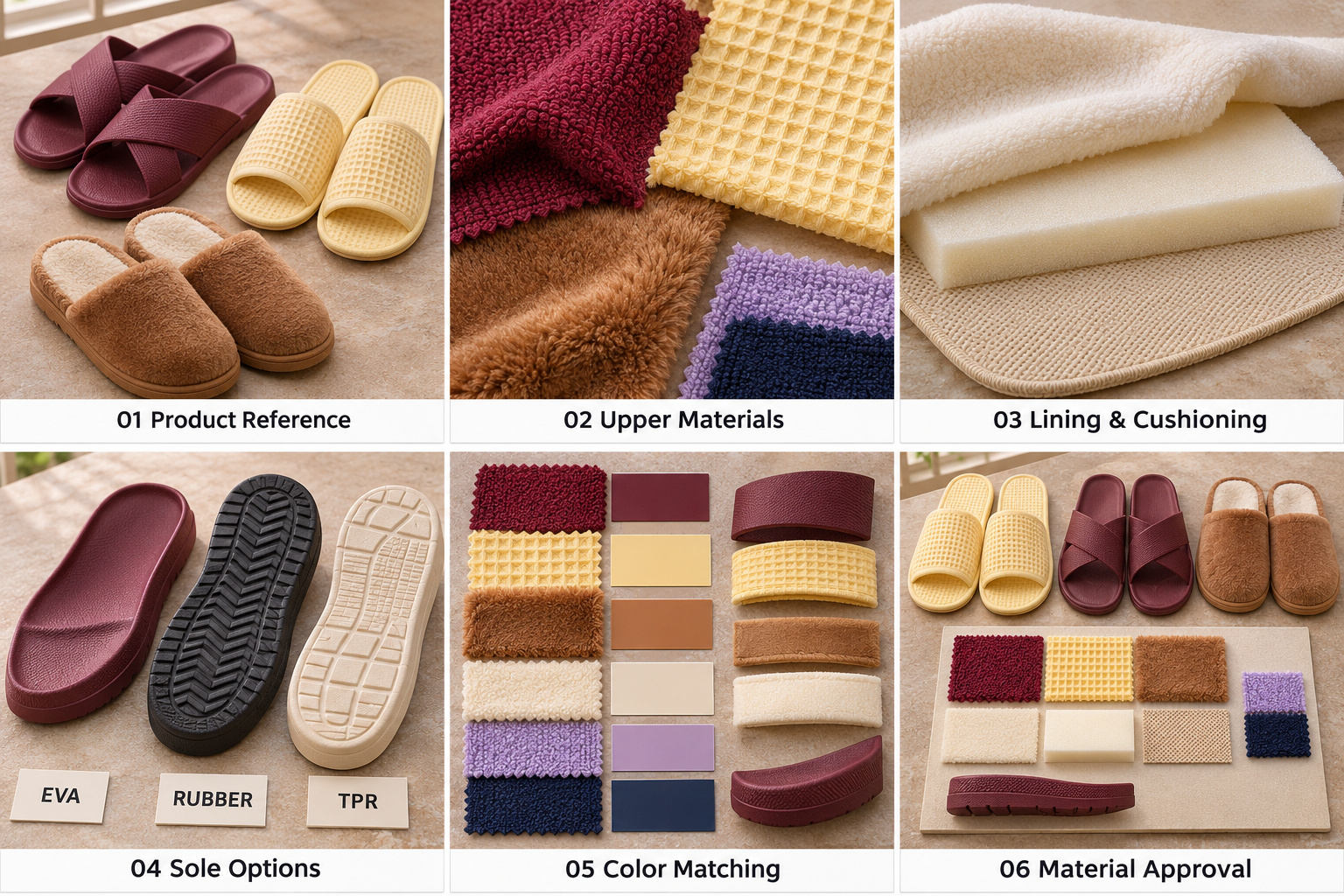 Specify Upper and Lining Materials Separately
Relevant textile options include cotton fabrics, terry, waffle, fleece, plush and faux fur, depending on the selected construction. Confirm composition, texture, thickness and the required appearance against a physical reference.
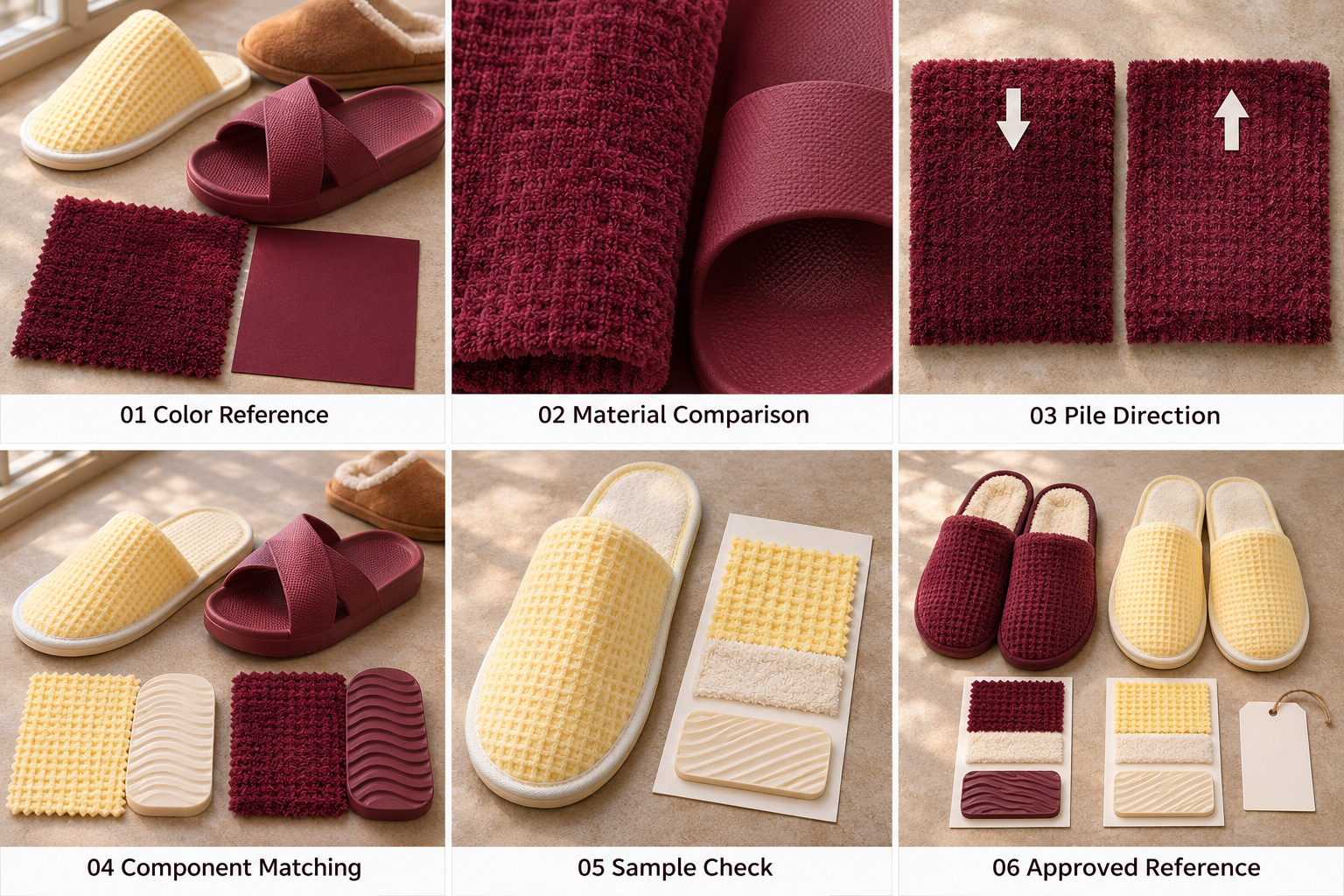
For plush and faux fur styles, pile length, density and direction influence the finished shape and how paired slippers look together. Sheepskin products require separate confirmation of the upper, lining and other components; wool lining and sheepskin construction should not be treated as interchangeable descriptions.
Lining and cushioning also need review. Changing their thickness can reduce internal space or alter upper proportions, linking material selection to sizes and fit.
Review Sole Materials and Construction
EVA, rubber and TPR options are considered for applicable styles. Discuss the required weight, flexibility, thickness, tread and attachment method alongside the material designation.
A sole material name alone does not define its performance. Existing components may offer a practical starting point, while a different profile or compound can require further sampling or tooling assessment. Our sole production and bonding page explains the construction details that need confirmation.
Any requested slip resistance, abrasion or other functional performance must be specified and assessed for the product and intended conditions.
Approve Colors on the Actual Material
Provide a physical color reference or an agreed color standard. Screen images help communicate a direction, but they do not establish the final shade.
The same reference can appear different on terry, long-pile fabric and molded components because texture and finish affect its appearance. Confirm whether adjacent parts need a close match or an intentional contrast. Review submitted swatches or component samples before approving the finished combination.
For repeat orders, identify the retained color reference and review any proposed material substitution before production.
 Confirm Samples, Minimums and Timing
Material minimums can apply separately by fabric, compound or color. Dividing an order across several shades may change the workable quantity and cost, even when the total pair count remains unchanged.
Sampling time depends on material availability, color development and construction changes. During slipper sample development, confirm which swatches, components and completed samples require approval. Bulk scheduling follows the agreed specifications and material readiness.
Carry Material References into Production
Approved references should identify composition, shade, texture and relevant dimensions. Applicable checks compare incoming materials and finished pairs against those details, including visible shade differences, pile direction and component matching.
Packing instructions should account for compression-sensitive uppers and possible color transfer between contacting surfaces. Additional testing requirements are agreed by product and destination market rather than assumed across the range.
Send Your Material and Color Brief
Share your slipper reference, preferred upper, lining and sole specifications, color references, size range and estimated quantity per color. Include packaging, target delivery timing and any required performance or documentation.
We review suitable combinations, sample requirements and commercial conditions before confirming the order specification.