


Define Materials by Component and Intended Use
Soletrivo Slippers supports importers, wholesalers, private label brands and hospitality buyers reviewing materials for specification-based orders. Preparation depends on the selected construction, from textile hotel and indoor slippers to molded slides and assembled footwear.
Identify the requirements for each component: upper, lining, cushioning, footbed, straps and outsole where applicable. A reference photograph helps establish appearance, but composition, thickness, texture and construction need separate confirmation before materials are prepared.
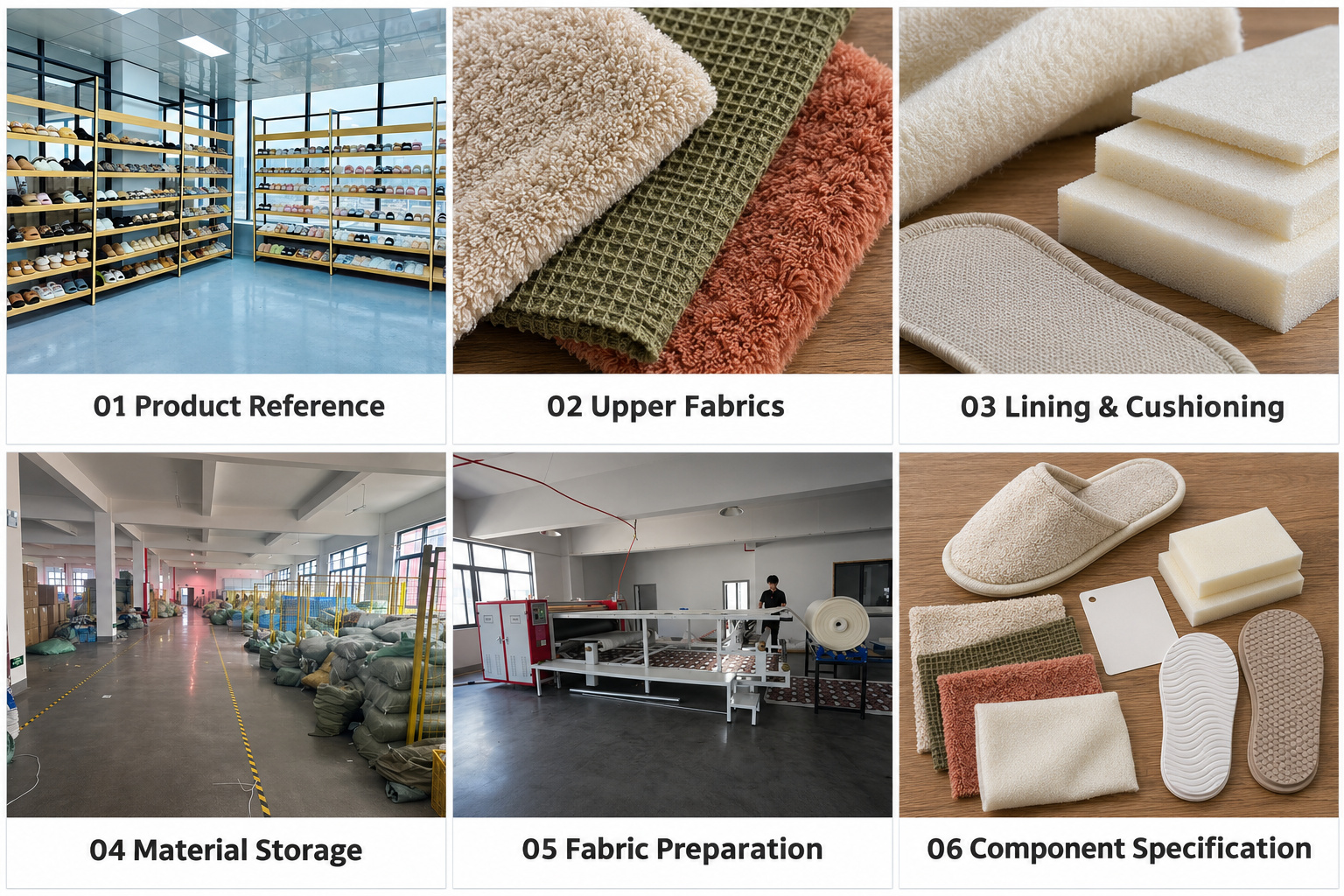
Select Uppers and Linings Against Physical References
Relevant options may include cotton fabrics, terry, waffle, fleece, plush, faux fur and sheepskin components. Selection should reflect the intended use, required appearance, assembly method and price target.
For pile fabrics, confirm length, density, direction and backing. These details affect cutting, seam appearance and the consistency of finished pairs. Sheepskin styles require clear descriptions of the upper and lining rather than one broad material claim.
Review custom materials and colors using actual swatches so the approved reference includes both shade and texture.
 Match Cushioning and Soles to the Construction
Cushioning thickness and firmness influence internal space, upper proportions and the finished feel. Confirm the required layer structure against the sample rather than approving foam by appearance alone.
EVA, rubber and TPR components are reviewed for applicable styles. Relevant details include dimensions, thickness, flexibility, tread and attachment method. Existing components must match the intended size range; changes may require further development. Material compatibility is also considered during sole production and bonding.
Check Incoming Materials Before Processing
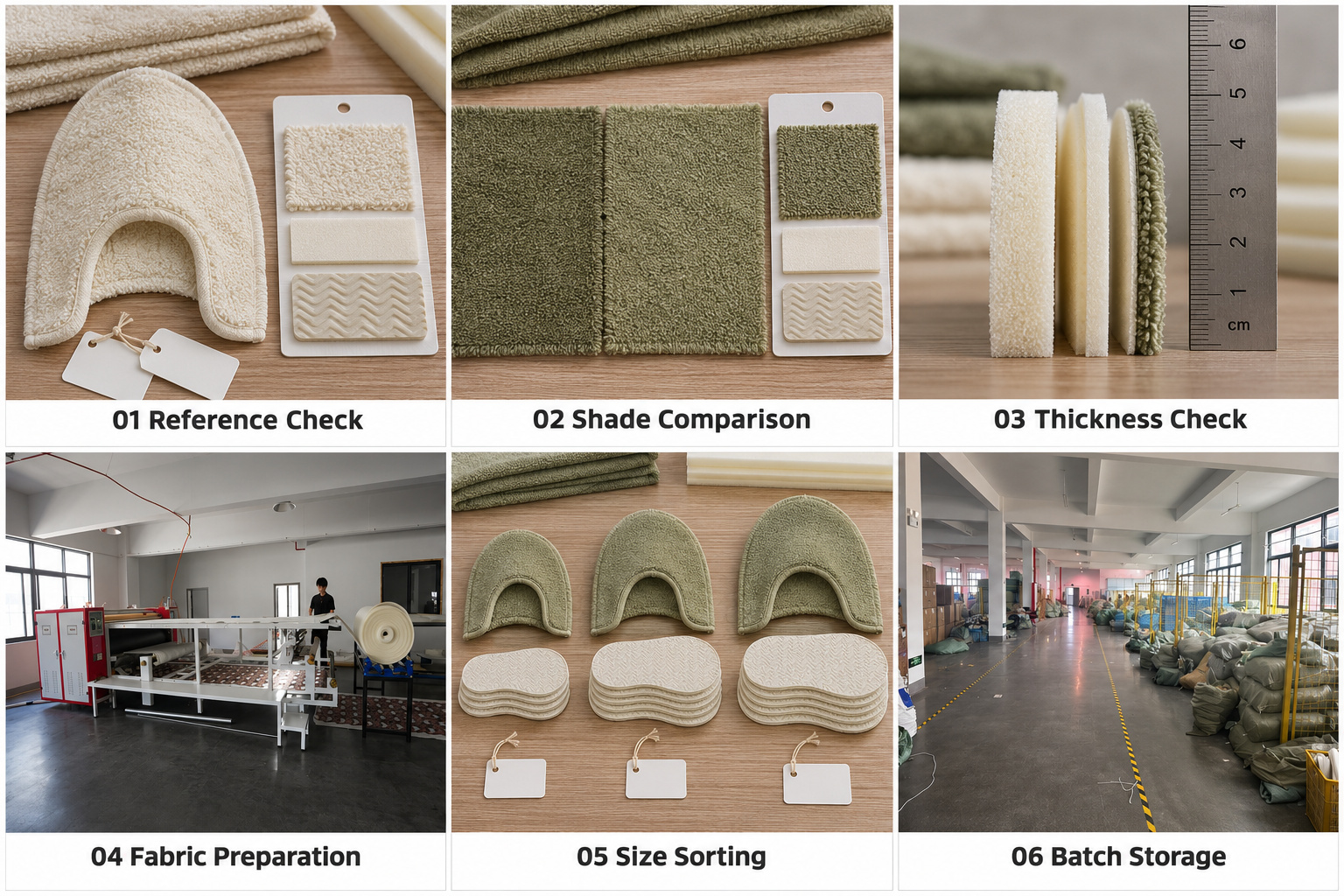
Applicable incoming checks compare materials with the approved references for identification, shade, texture, thickness, visible defects and component dimensions. The inspection scope is agreed according to the product and order requirements.
Separate material batches should remain identifiable where shade or other differences could affect production. Questionable materials require review before use. Supplier descriptions alone do not establish functional performance; requested testing and supporting documentation need a defined scope.
Prepare Materials for Cutting and Assembly
Textiles need an agreed cutting direction, particularly when pile, pattern or stretch affects appearance and fit. Upper and lining pieces must correspond to the approved patterns and size assortment.
Prepared components should remain grouped by style, color and size to reduce mixing during subsequent operations. Sole and strap quantities also need reconciliation with the planned order breakdown. These preparation details support the cutting and sewing process and later assembly.
 Confirm Availability, Minimums and Substitutions
Material minimums may apply by fabric, compound or color, separately from the total slipper quantity. Several shades or constructions can create additional purchasing requirements and affect cost.
Material readiness influences sampling and bulk scheduling. If a specified material becomes unavailable, any alternative requires review for fit, appearance, processing and price. Approval should identify the revised reference before use, with packaging requirements reconsidered where bulk or compression sensitivity changes.
Send Your Material Requirements
Share your slipper reference, component specifications, physical swatches where available, color standards, size range and estimated quantities. Include target-market requirements, testing expectations and requested timing.
We review material suitability, preparation needs and unresolved sample details before confirming production conditions. The agreed references then support the applicable quality inspection process through to finished pairs and packing.