


 Production Routes Matched to Your Slipper Order
Soletrivo Slippers, based in Cixi, Ningbo, supports overseas importers, wholesalers, distributors, private label brands and hospitality buyers with slipper sourcing and manufacturing arrangements. Our range includes slides, sandals, flip flops, hotel slippers, women’s slippers, sheepskin, faux fur and fuzzy styles.
Different constructions require different materials, components and production facilities. We review the selected model, order specifications and applicable manufacturing route before confirming production arrangements. The scope of in-house and cooperating-factory work is clarified for the relevant product.
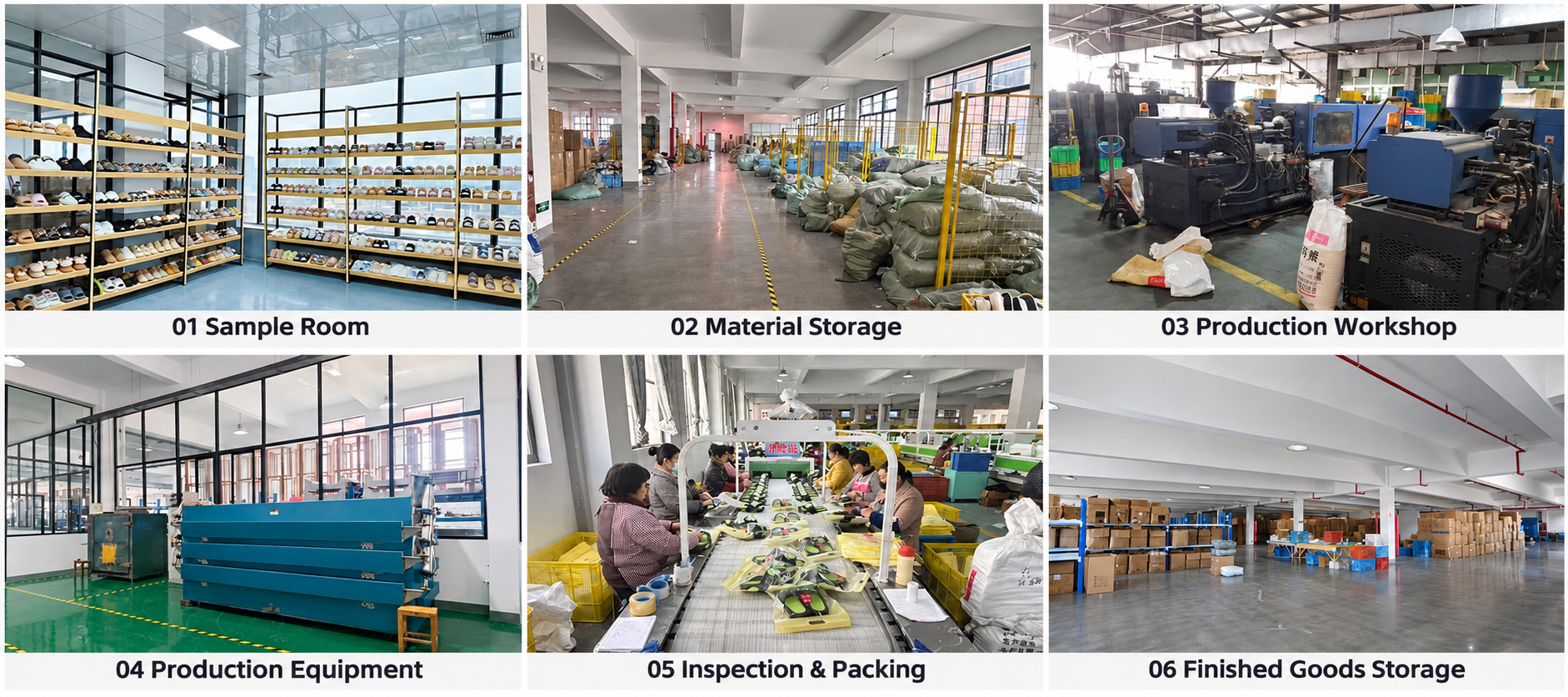
Material Selection and Component Preparation
Production preparation begins with the approved upper, lining, cushioning and sole requirements. Relevant materials may include terry, waffle fabric, fleece, plush, faux fur, sheepskin components, EVA, rubber or TPR.
Material references need to identify composition, shade, texture and applicable thickness or dimensions. For pile fabrics, direction and appearance affect the consistency of finished pairs. Sole components must match the intended size and attachment method.
During material selection and preparation, availability and component minimums are reviewed alongside the order quantity. Proposed substitutions require approval before use.
Cutting and Sewing Textile Components
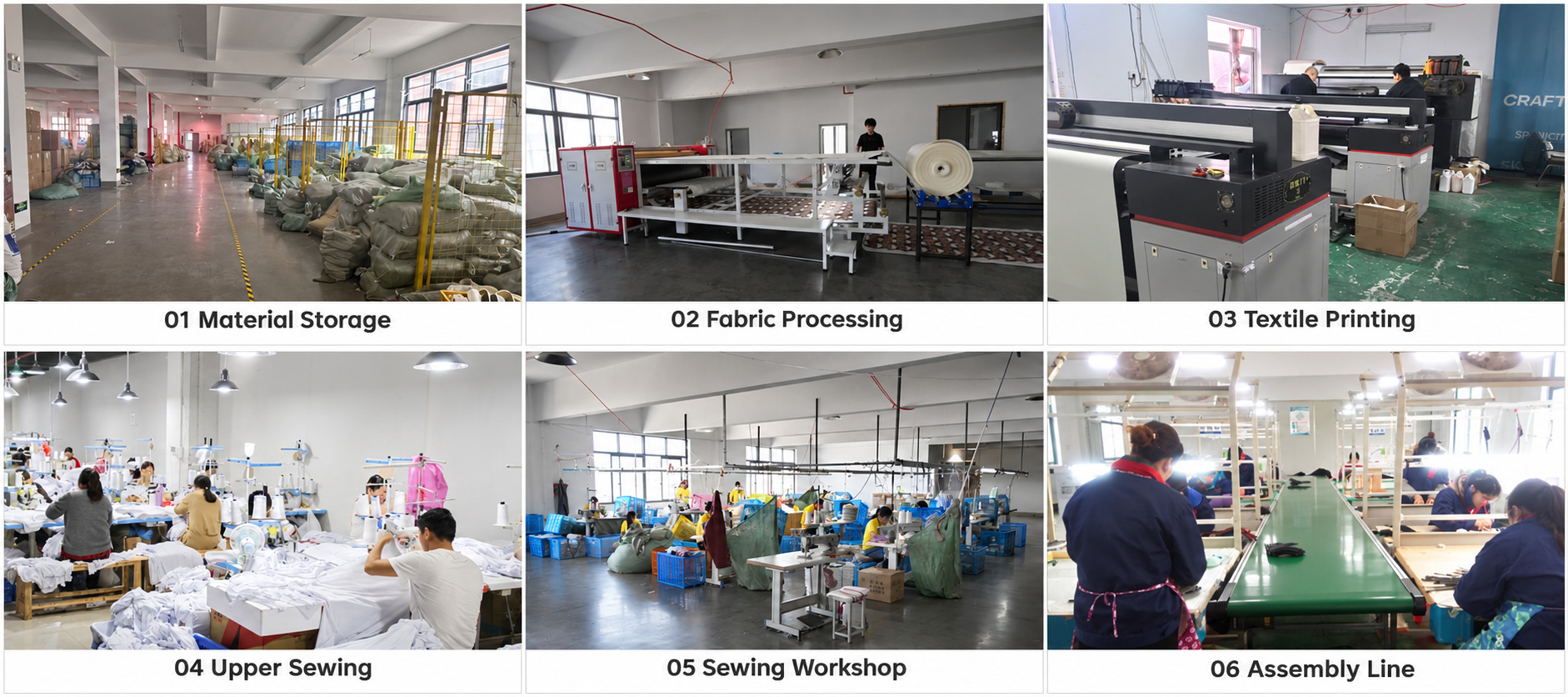
For applicable hotel and indoor slippers, cutting establishes the upper and lining shapes needed for assembly. Pattern dimensions, material direction and seam allowances influence the finished opening, coverage and fit.
Sewing requirements depend on the construction. Relevant operations may include joining upper sections, attaching lining, preparing straps and applying edge binding. Checks focus on alignment, seam appearance and component dimensions before further assembly.
The cutting and sewing process should follow the approved pattern and material combination. A change in lining thickness or fabric behavior may require adjustments rather than direct substitution.
 Sole Forming and Upper Attachment
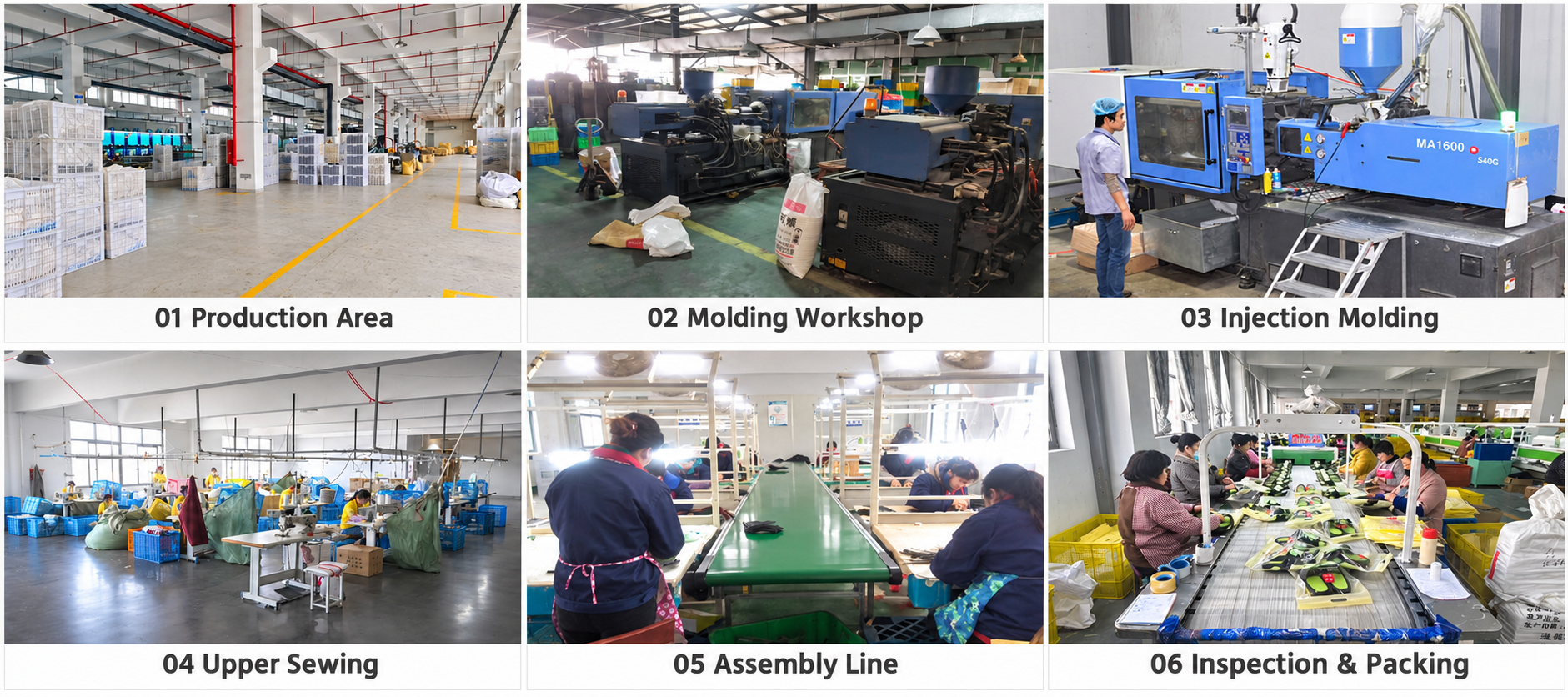
Molded slides, assembled sandals and sewn indoor slippers do not share one universal sole process. Depending on the model, production may use existing sole components, cutting operations or a suitable molding route.
Changes to sole outline, footbed contour, tread or size range can affect tooling and component availability. These requirements are assessed before production is scheduled.
For assembled constructions, upper and sole compatibility matters as much as appearance. Attachment may involve stitching, bonding or mechanical fitting, according to the design. The applicable sole production and bonding requirements establish which preparation and checks are needed.
Branding, Assembly and Finishing
Printing, embroidery, molded details and woven labels are reviewed against the selected material and usable application area. Branding may need to be completed before assembly when access to the upper becomes limited.
Assembly brings together the approved components, including straps, uppers, footbeds and outsoles where applicable. Finishing then addresses relevant trimming, thread ends, cleaning and pair matching.
Logo direction, size identification and left-right consistency require attention before packing. A finished pair should correspond to the approved construction and appearance reference, including any documented changes.
 Inspection Against Approved Specifications
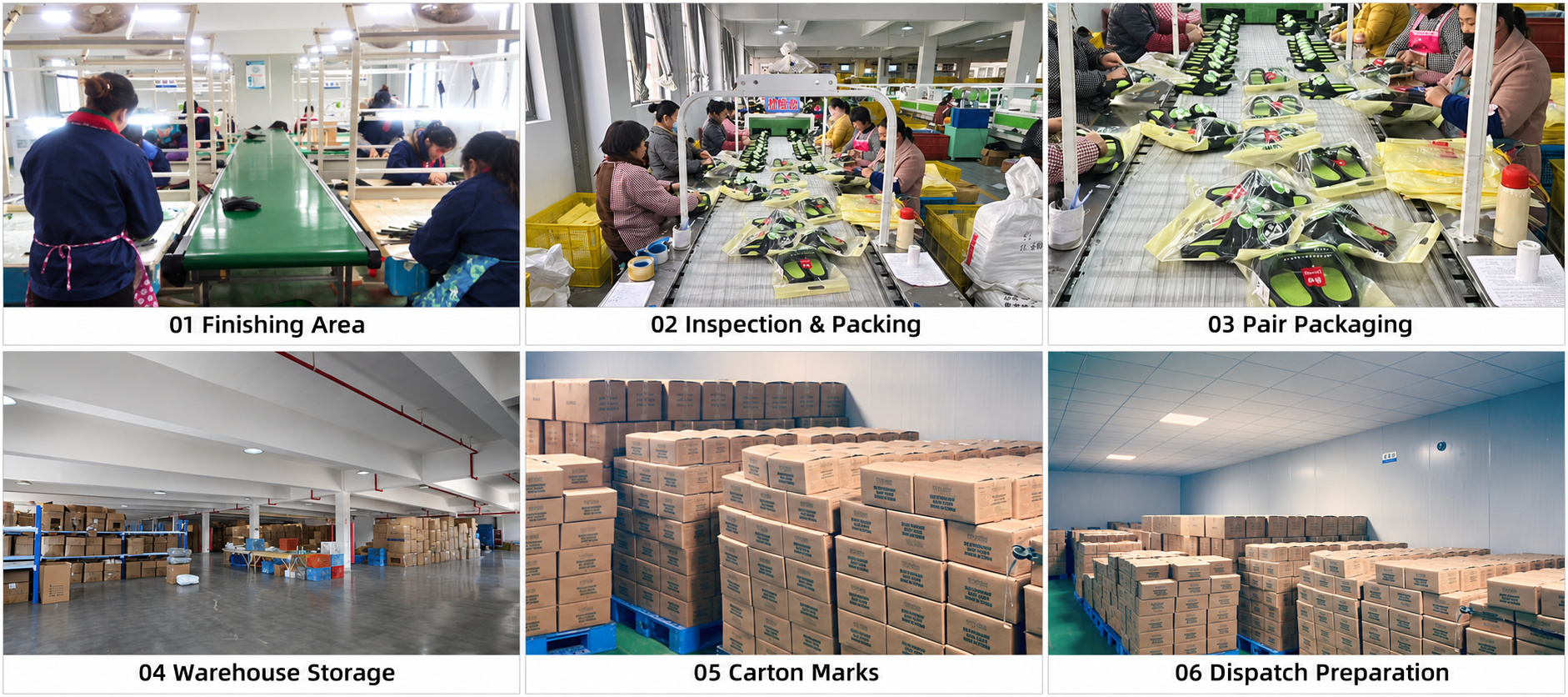
Inspection points are agreed according to the product, destination market and purchase requirements. Applicable checks cover materials, dimensions, stitching, strap or sole attachment, logo placement, appearance and pair matching.
The approved sample and written specifications provide the reference. Measurement methods and acceptance requirements should be agreed before inspection, especially where several sizes or materials are involved.
Our quality inspection process also addresses packing accuracy and the handling of identified discrepancies. Functional testing requires a separately defined scope; visual checks alone do not establish performance.
Pair Packing and Export Preparation
Finished pairs are packed in the agreed bags, bands or boxes. Packing instructions should identify size and color assortments, labels, pairs per carton and shipping marks.
Packaging must accommodate the selected construction without unnecessary compression or movement. Carton quantities, dimensions and weights are confirmed against the actual packing arrangement. Dispatch coordination and documents follow the agreed order and shipping terms.
 Confirm Production Conditions Before Ordering
MOQ and lead time depend on construction, material readiness, colors, size assortment, branding, tooling and production availability. Sample approval is one milestone; outstanding materials, packaging or specification decisions can still affect scheduling.
Send your preferred styles, reference samples or drawings, estimated quantities, size breakdown and target market. Include branding, packaging, inspection expectations and requested delivery terms.
We use these details to review production feasibility, identify unresolved requirements and propose commercial conditions before the bulk order is confirmed.