


Confirm the Application Before Production
Soletrivo Slippers supports importers, wholesalers, private label brands and hospitality buyers reviewing printed and embroidered logos for slipper orders. The selected upper, construction and artwork determine which process is suitable.
Textile hotel slippers, plush indoor styles and applicable slide components require different preparation. We review the material, application area and production sequence before confirming feasibility, sample requirements and pricing. Printing and embroidery are assessed separately rather than treated as interchangeable finishes.
Prepare Artwork for the Selected Process
Provide vector artwork where available, together with logo dimensions, colors, placement and orientation. Identify the approved file version for each style, especially when several products share a brand but use different application sizes.
Fine lines, small lettering and closely spaced details may need adjustment. Printing preparation depends on the proposed method, while embroidery requires a stitch file developed for the artwork and fabric. Any changes affecting the visible design should be approved before sampling.
Review custom logo and branding requirements alongside the product specification.
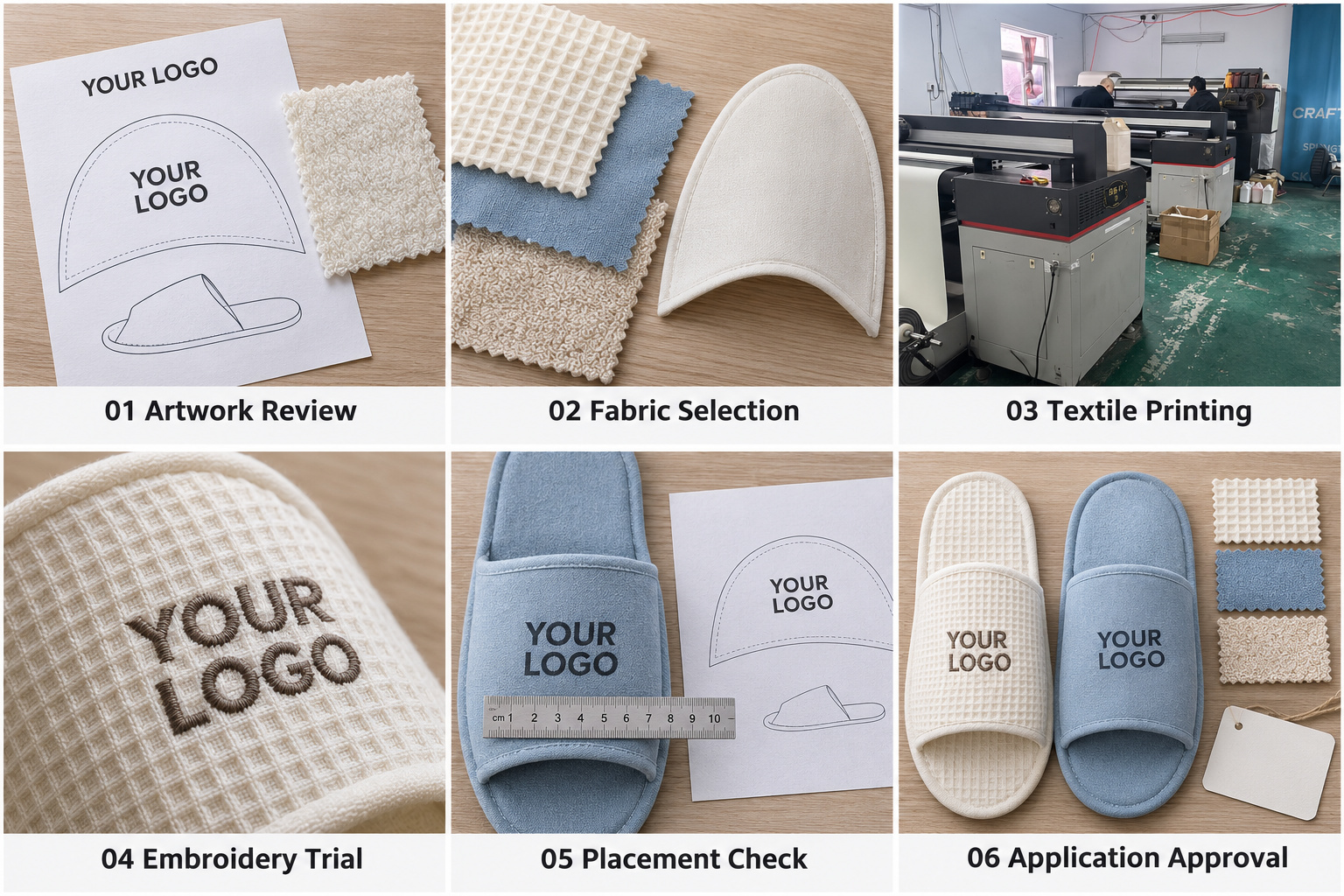 Check Printing on the Actual Surface
Surface texture, absorbency, color and component shape affect the printed result. A smooth textile and a looped terry upper will not reproduce the same artwork identically.
An application trial should establish coverage, edge definition, color and placement. Relevant drying or setting conditions depend on the selected printing system. Printed components must be suitable for subsequent handling and assembly before they move forward.
Requested rubbing, adhesion or washing performance requires an agreed test scope; visual appearance alone does not verify durability.
Adjust Embroidery to Fabric and Construction
Embroidery needs appropriate backing, stitch density and access to the application area. Dense artwork can stiffen a soft upper, while deep pile may obscure small letters or fine details.
Review the sample for legibility, puckering, thread appearance and reverse-side finishing. Backing and trimmed thread ends should suit the construction and any contact with the foot. Our material selection and preparation review helps identify fabric characteristics that affect the result.
Coordinate Branding with Upper Assembly
Some applications are easier to complete on flat upper pieces before lining attachment or closure. The sequence must preserve the approved position after seams, binding and assembly are finished.
Confirm whether placement is measured from a cut edge, finished opening or another agreed reference point. Left and right slippers also need a defined logo direction. Changes to upper patterns or size grading may require placement review before bulk processing.
Inspect Production Against the Approved Sample
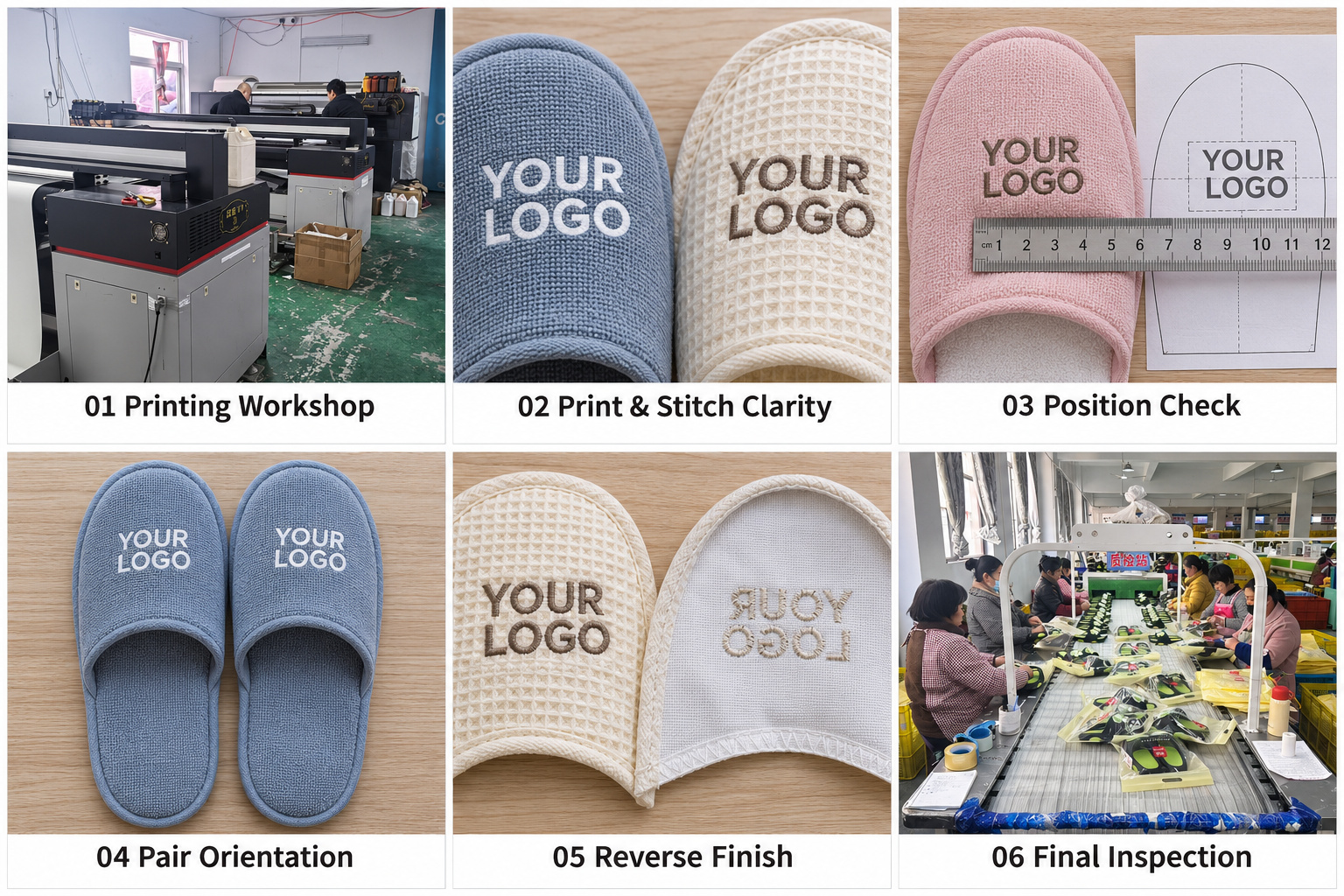
The approved application sample establishes the artwork version, dimensions, colors and positioning reference. Applicable production checks compare printing clarity, embroidery appearance, orientation and consistency across pairs.
Keep different artwork versions and color groups identifiable during handling. Components with unresolved branding discrepancies should be reviewed before assembly continues. The agreed quality inspection process determines the relevant checkpoints and acceptance requirements.
 Review Costs, Timing and Packing Requirements
Artwork complexity, logo size, color count, application positions and setup requirements affect costs. MOQ depends on the slipper order and any separate process minimums. Trials, revisions and approval timing influence the production schedule.
Packing should protect decorated surfaces from unnecessary rubbing, pressure or contact with other components. Send your slipper reference, artwork, quantities by style and color, target market and required performance. Include sample needs and delivery timing so the application route can be assessed before production is confirmed.