


Establish Inspection Requirements Before Production
Soletrivo Slippers supports importers, wholesalers, private label brands and hospitality buyers with inspection requirements matched to the selected product. Hotel slippers, textile indoor footwear, slides and sandals need different checks.
The approved sample, written specifications and packing instructions establish the inspection reference. Confirm the applicable checkpoints, measurement methods, tolerances and acceptance criteria before production. Any sampling plan, inspection quantity or functional testing requirement needs agreement rather than being assumed across every order.
Check Incoming Materials and Components
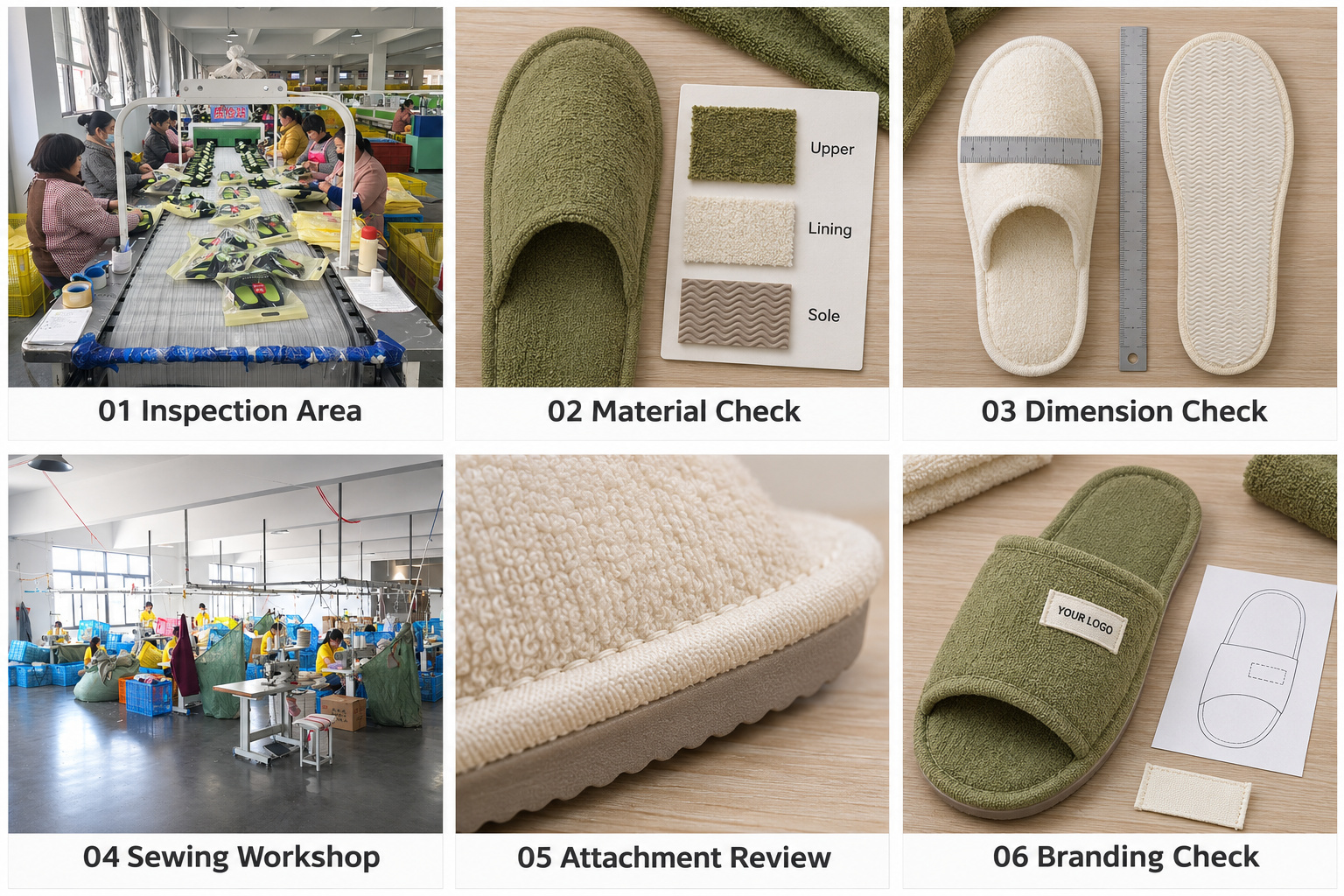
Relevant incoming checks compare upper fabrics, linings, cushioning, straps and soles with the approved references. Review identification, shade, texture, visible defects and applicable dimensions or thickness.
Different material batches should remain identifiable where variation could affect finished pairs. For plush styles, pile direction and appearance require attention. Sole components must correspond to the intended construction and size assortment. Our material selection and preparation process explains the references used before processing.
 Inspect Dimensions and Construction During Production
Measurements should use agreed reference points. Outsole length, footbed length and usable internal space are different measurements and should not be substituted for one another.
Applicable construction checks cover upper alignment, openings, stitching, binding, strap positions and sole attachment. Look for relevant issues such as open seams, puckering, displaced components or lifted edges. Reviewing accessible details during assembly helps identify discrepancies before later operations obscure them.
The selected sole production and bonding route determines which attachment checks apply.
Review Branding and Finished Appearance
Compare logos with the approved artwork and application sample. Relevant checks include dimensions, placement, direction, color and clarity. Printing and embroidery need different visual checks, while woven labels require attention to attachment and positioning.
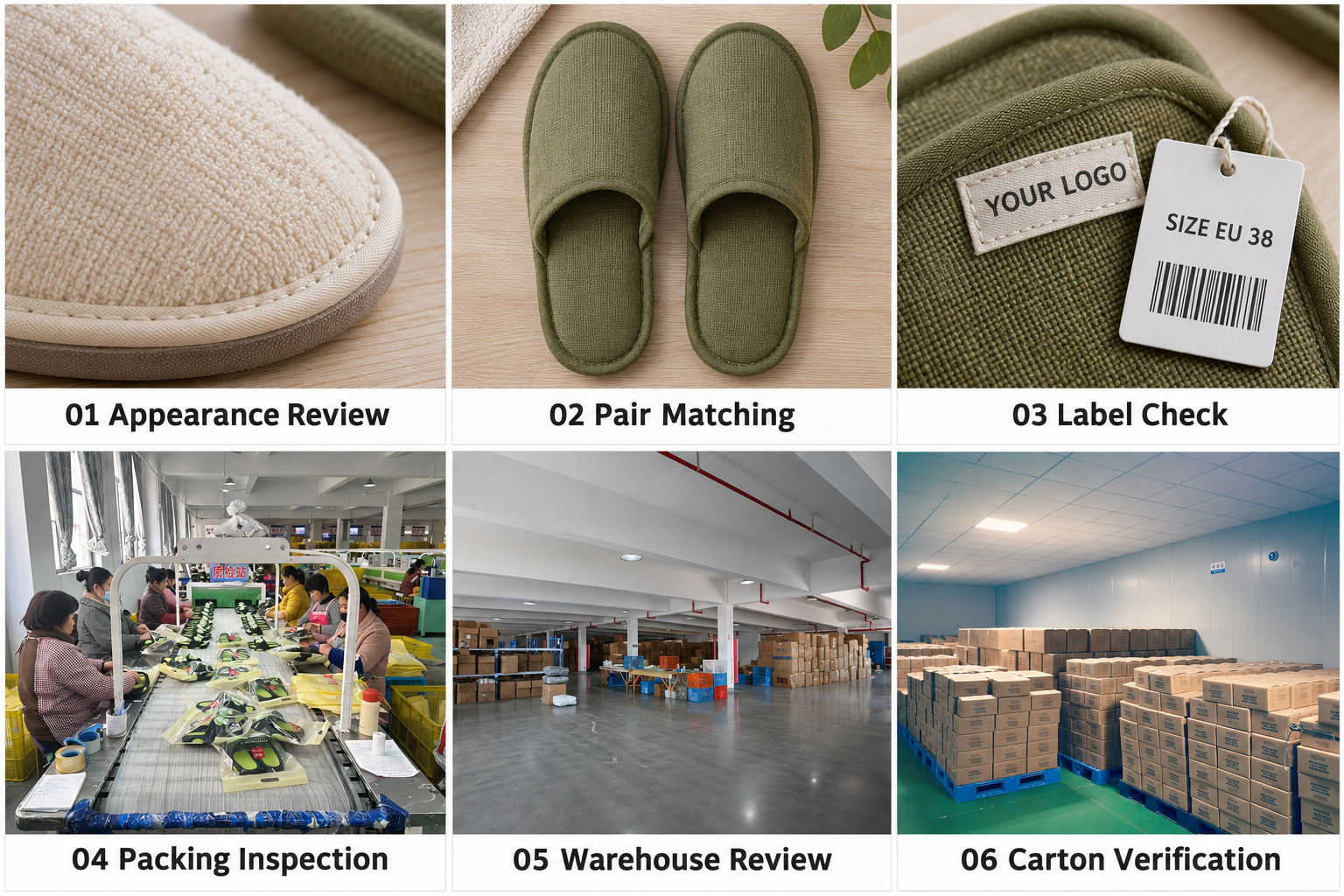
Finished appearance checks address visible marks, loose threads, rough edges and material consistency. Pair matching also considers size, shade, shape and upper coverage. Our assembly and finishing page describes the preparation of completed pairs before packing.
Define Functional Tests Separately
Visual inspection does not establish bond strength, slip resistance, abrasion resistance or washing performance. Requested functional tests need a defined method, product scope and acceptance criteria.
Confirm whether testing requires separate samples, laboratory arrangements or additional lead time. Available reports must correspond to the relevant product and materials. Third-party laboratory testing and independent shipment inspection are separate services; arrangements and responsibilities are reviewed for the order.
Verify Pair Packaging and Carton Details
Packing checks compare finished goods with the approved instructions. Review product identification, size and color accuracy, pair counts, barcode information and the condition of bags, bands or boxes.
For assorted cartons, confirm the required size and color breakdown. Outer-carton checks address quantity, numbering and shipping marks. Packaging should accommodate the product without unnecessary compression or movement. Final checks take place at an agreed stage, with the packing status and inspection coverage recorded.
 Record Discrepancies and Confirm the Next Step
Inspection findings should identify the affected product, quantity and specification reference, supported by photographs or measurements where useful. Goods requiring review should remain identifiable.
Depending on the issue, the next step may involve sorting, rework, replacement or buyer review, followed by the agreed reinspection. A production deviation should not become an accepted specification without confirmation.
Send Your Inspection Requirements with the Inquiry
Share the selected style, target market, approved references and order breakdown. Include inspection criteria, requested tests, packaging instructions and any independent inspection requirements.
These details help assess inspection scope, sample needs, costs and timing alongside production and export shipment preparation.