


Follow the Approved Slipper Construction
Soletrivo Slippers supports importers, wholesalers, private label brands and hospitality buyers with production arrangements matched to the selected style. Assembly and finishing requirements differ between textile indoor slippers, hotel slippers, sandals and molded slides.
For assembled styles, the work brings together prepared uppers, linings, footbeds, straps and soles as applicable. One-piece molded products follow their own finishing route. The approved sample and written specifications establish which components, connections and appearance details need checking.
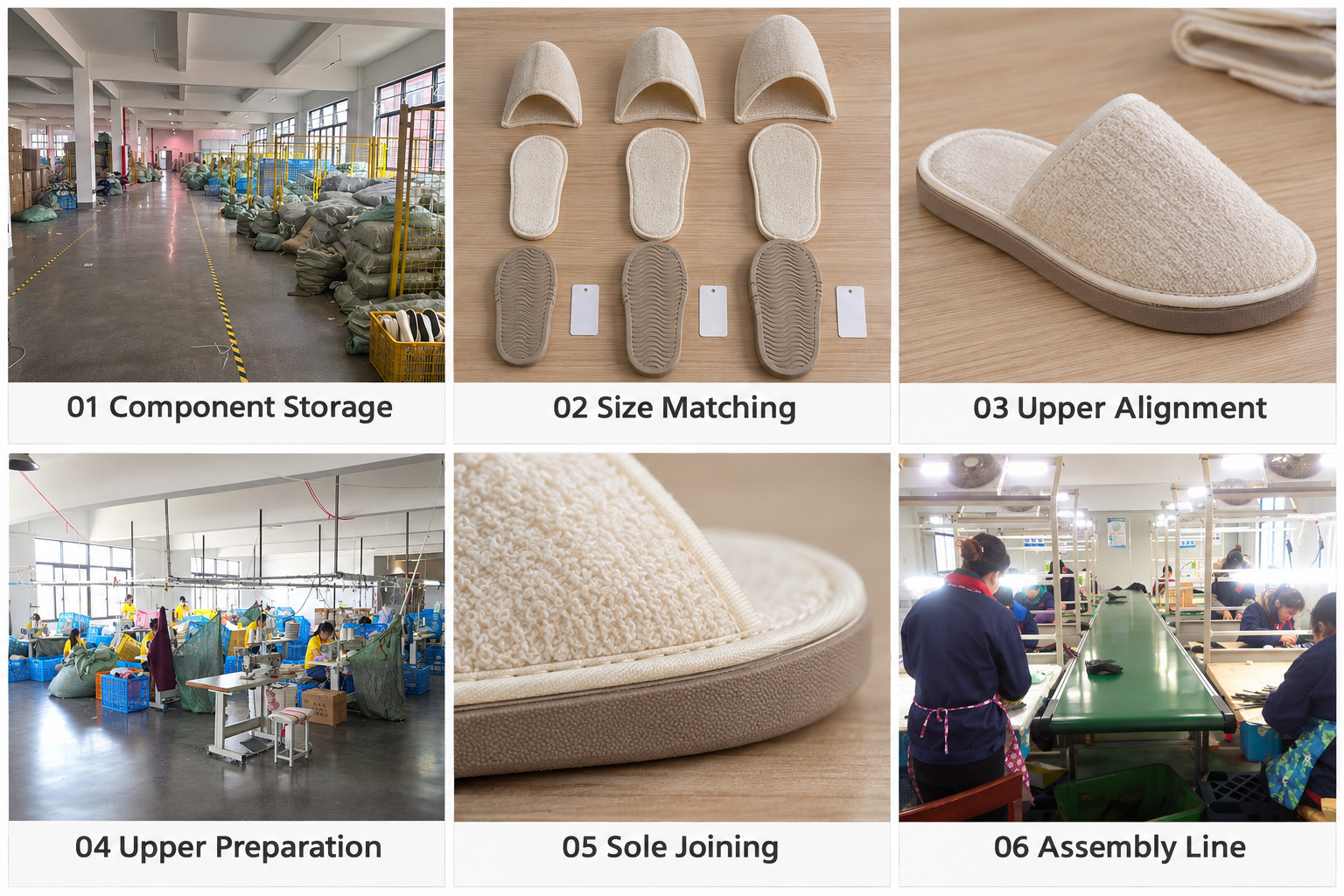
Match Components Before Joining
Components must correspond to the correct style, color, size and sample version. Similar-looking soles or uppers can differ in dimensions, so visual similarity alone is insufficient.
Check upper orientation, footbed alignment and the position of straps or other attachments before joining. Components should sit together without unwanted stretching, twisting or uneven coverage. Material changes that affect thickness or flexibility require review before assembly proceeds.
Our material selection and preparation page explains the references used to prepare compatible components.
 Check Attachment During Assembly
The attachment method depends on the design. Relevant operations may include stitching, bonding or fitting straps into the specified connection points.
Inspect alignment and accessible connections as work progresses. Uneven joints, trapped lining or displaced components are easier to address before further operations obscure them. Bonded constructions also require the agreed setting conditions before subsequent handling. Review the applicable sole production and bonding requirements for the chosen model.
Trim Edges and Tidy Textile Details
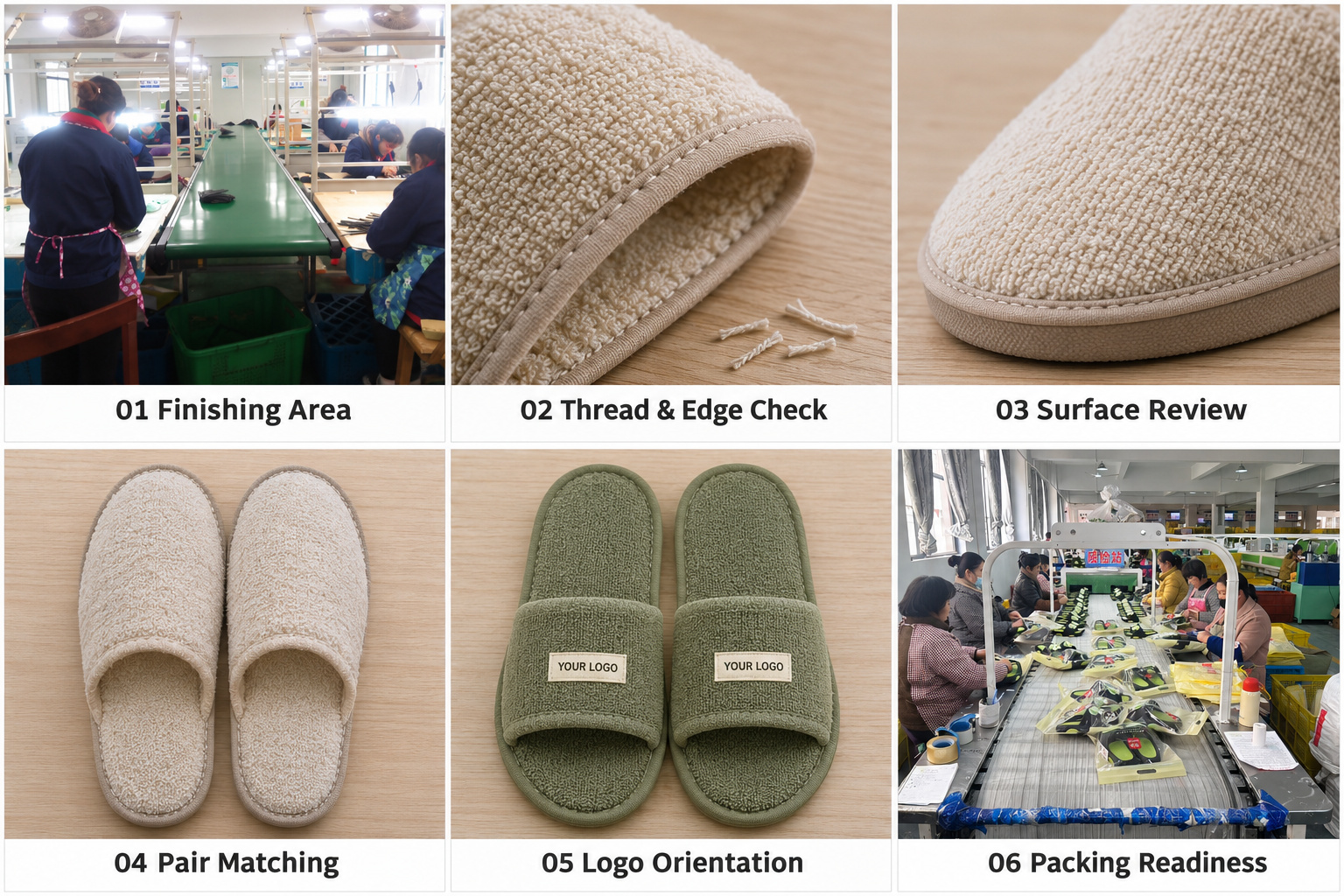
Finishing addresses the details remaining after assembly. Applicable work may include trimming excess threads, tidying binding joins and removing molding flash or rough edges where the construction requires it.
For textile uppers, check that finishing does not cut into seams or damage surrounding fabric. Plush and faux fur may need careful attention around stitched areas to maintain the approved appearance. Relevant cutting and sewing references help establish the intended seam and edge finish.
Clean Surfaces Without Altering the Product
Finished slippers should be checked for loose fibers, visible marks and processing residues. Any cleaning method must suit the upper, decoration and sole material.
Avoid treating a surface issue in a way that changes shade, texture or logo appearance. Products requiring further review should remain identifiable rather than being mixed into completed pairs. Requested appearance limits and reference defects should be agreed within the inspection scope.
Match Left and Right Slippers
Pair matching considers size, shape, material shade, upper coverage and branding direction. Pile direction and decorative placement can create visible differences even when the components carry the same size marking.
Check pairs against the approved reference using the agreed measurement points where needed. The quality inspection process defines applicable checks and acceptance requirements. Visual finishing checks do not replace any separately agreed functional testing.
 Release Finished Pairs for Packing
Before packing, confirm that unresolved assembly or appearance issues have been addressed. Keep size and color groups identifiable, and protect finished uppers from unnecessary crushing, rubbing or soiling during transfer.
Order quantity, construction complexity, size assortment and finishing requirements affect cost and scheduling. Packaging must accommodate the finished shape and any handling restrictions associated with the selected process.
Send your slipper reference, component requirements, size breakdown and quantities by color. Include branding, appearance expectations, packaging and target timing so we can review the assembly and finishing scope before confirming production conditions.