


Match the Sole Process to the Slipper Construction
Soletrivo Slippers supports importers, wholesalers, private label brands and hospitality buyers reviewing sole requirements for bulk orders. The production route depends on the selected slipper, material and attachment method.
One-piece molded slides, assembled sandals and textile indoor slippers require different operations. Some styles use existing sole components; others need further development or tooling. We review the applicable production arrangements before confirming feasibility, sample requirements and commercial conditions.
Confirm Materials, Profiles and Dimensions
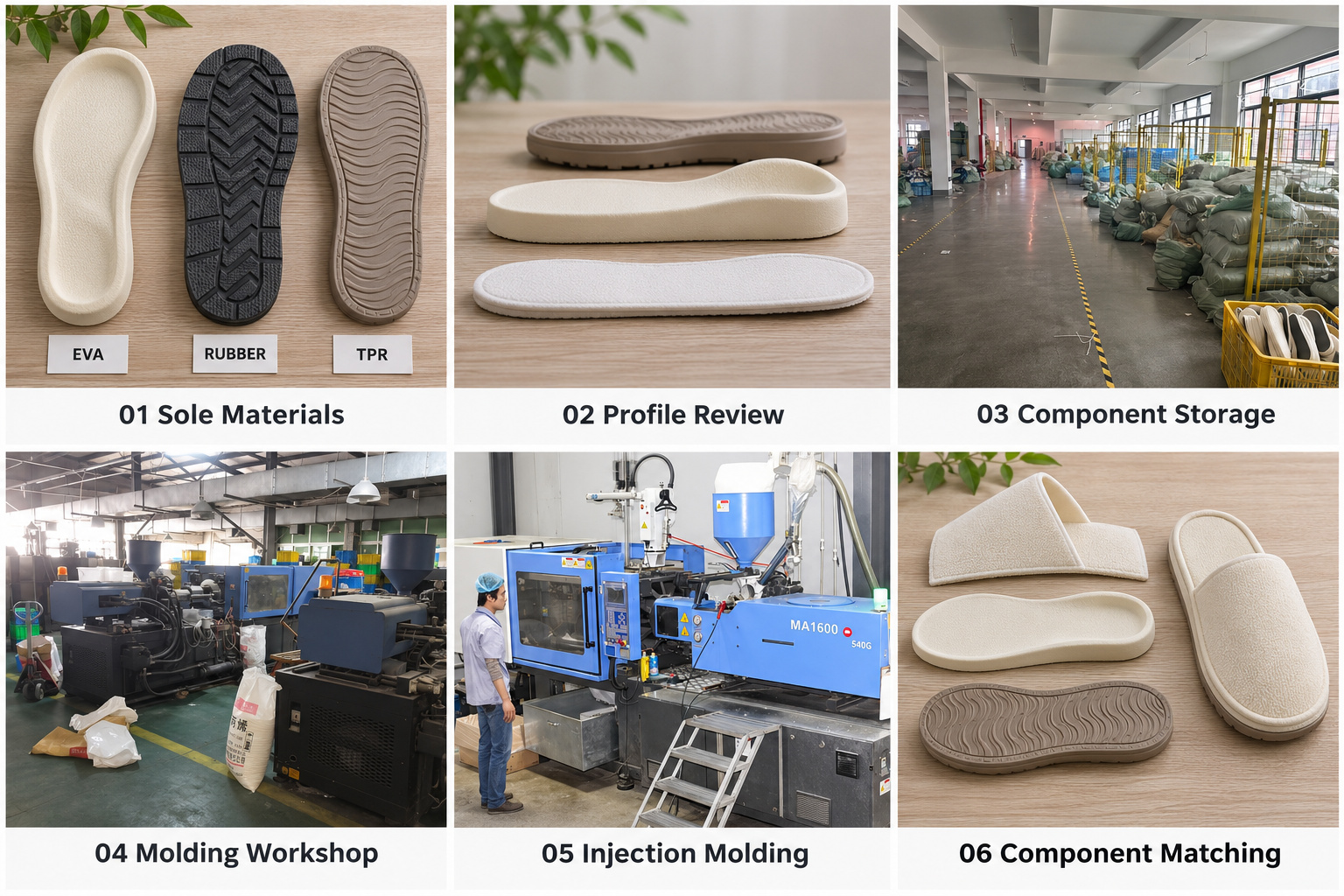
EVA, rubber and TPR options are assessed for relevant styles. Specify the sole outline, thickness, tread, flexibility and intended use alongside the material designation.
Footbed contour and sole dimensions must suit the upper, size range and construction. A similar-looking replacement may change fit or require a different attachment method. Our material selection and preparation review helps establish the component references before processing.
 Review Existing Components or New Tooling
Existing sole sizes and profiles should be checked against the proposed design first. Changes to thickness, tread, molded branding or attachment points may require revised components or new tooling.
Confirm which sizes need development and how the sole will connect to the upper or straps. Tooling costs, sample timing and component minimums depend on this scope. Manufacturing arrangements are confirmed for the selected product; equipment suitability should not be assumed across every sole material.
Prepare Surfaces for Bonded Constructions
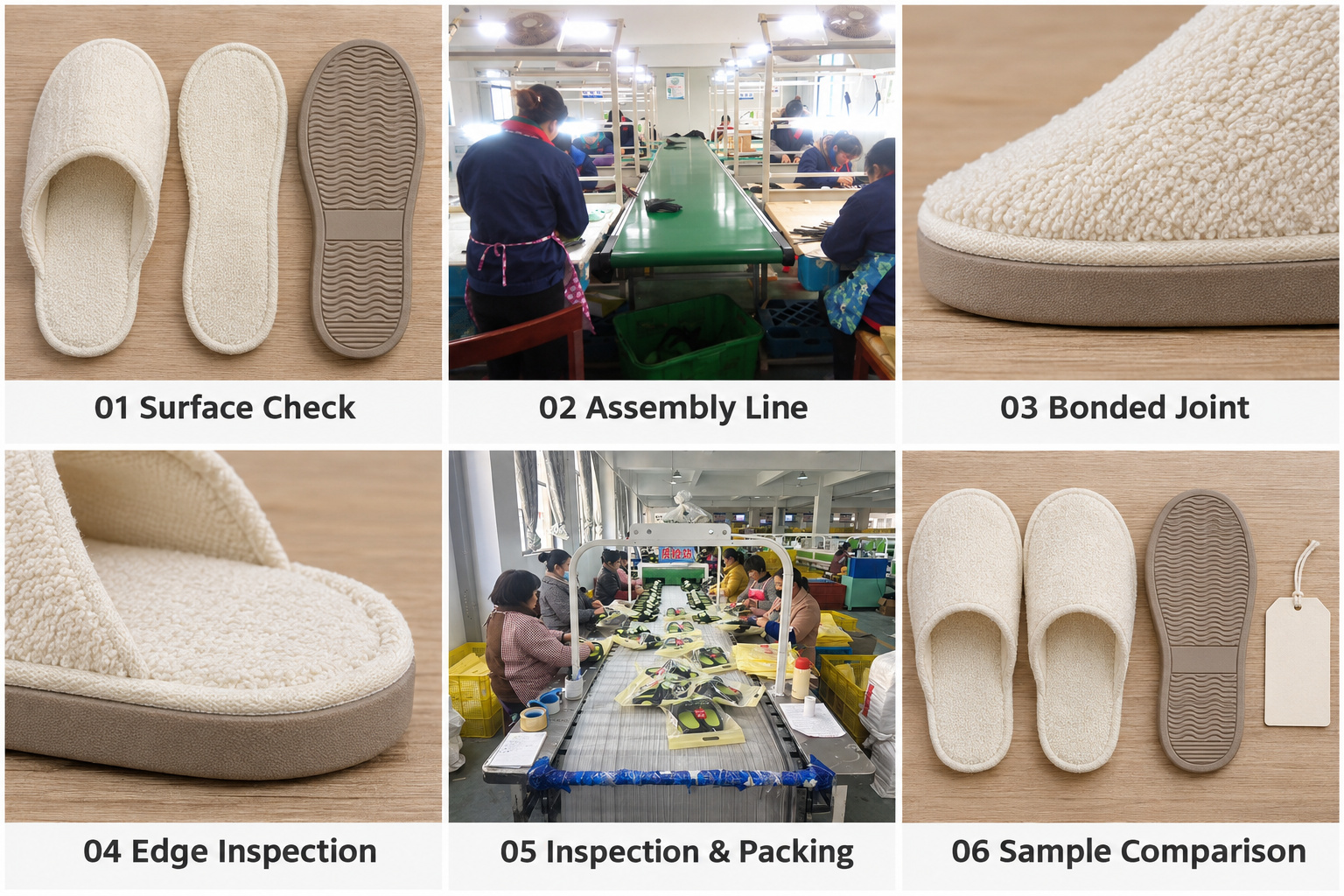
For applicable bonded styles, attachment surfaces need preparation suited to the materials and adhesive system. Relevant operations may include cleaning, controlled roughening or treatment, followed by adhesive application and the specified assembly conditions.
Preparation, adhesive compatibility, working time and pressing conditions affect the joint. These requirements must follow the selected process rather than a universal recipe. Unapproved material substitutions or contaminated surfaces can change bonding behavior and require review before assembly continues.
One-piece molded slippers do not follow this separate upper-to-sole bonding sequence.
Align Components and Check Attachment
Before joining, confirm component size, orientation and alignment. The upper should sit correctly against the sole without unwanted distortion or uneven positioning.
Checks during assembly address applicable gaps, lifted edges, excess adhesive and attachment consistency. Where the construction uses stitching or fitted strap connections, inspect those features against their own requirements. Subsequent assembly and finishing should preserve the approved shape and appearance.
 Agree Sample and Performance Requirements
A sample establishes the proposed sole appearance, dimensions and connection details. During slipper sample development, identify the representative sizes and constructions requiring approval.
Visual inspection does not establish bond strength, flex resistance or slip performance. Any requested testing needs an agreed method, scope and acceptance criteria. The applicable quality inspection process should distinguish appearance checks from functional verification.
Confirm Order and Packing Conditions
MOQ, cost and lead time depend on sole materials, size allocation, tooling, attachment complexity and component availability. Packing and dispatch timing must also respect any required setting or conditioning period for the selected process.
Send your slipper reference, upper and sole specifications, size breakdown, estimated quantities and intended market. Include performance expectations, packaging and target timing so the production route can be reviewed before quotation.