


Prepare Textile Uppers for the Selected Construction
Soletrivo Slippers supports importers, wholesalers, private label brands and hospitality buyers with production arrangements for textile slipper styles. Cutting and sewing apply to relevant hotel slippers, plush indoor footwear and other sewn constructions.
The work starts with approved patterns, materials, size requirements and sample details. Molded slides follow a different production route; the operations described here concern textile components prepared for subsequent assembly.
Confirm Patterns and Material Behavior
Upper and lining patterns must account for the intended opening, coverage, seam allowances and attachment method. A change in fabric thickness, stretch or cushioning can alter the finished fit even when the outline remains unchanged.
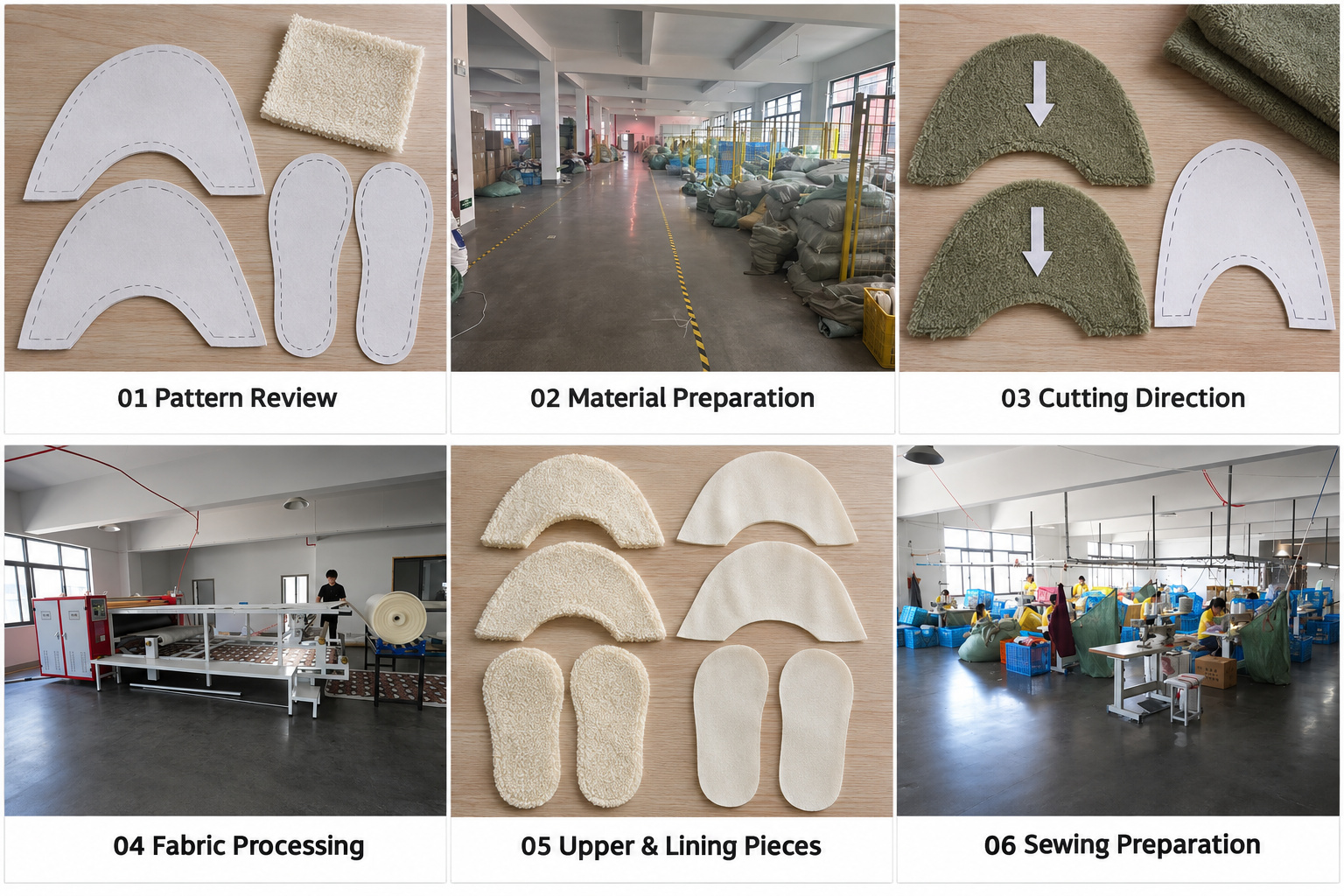
Review the selected materials before cutting begins. Plush and faux fur require attention to pile direction, while patterned fabrics may need alignment across paired uppers. Our material selection and preparation review helps establish the references used for these decisions.
 Cut and Sort Matching Components
Cut pieces need consistent dimensions and clearly identified size groups. Upper, lining and applicable reinforcement pieces should remain associated with the correct style, color and sample version.
Check visible defects and material direction before pieces move into sewing. Similar-looking sizes or shades can be mixed during handling, so component grouping matters throughout the batch. Left and right pieces must follow the pattern where the construction uses separate shapes.
Sew Uppers and Attach Linings
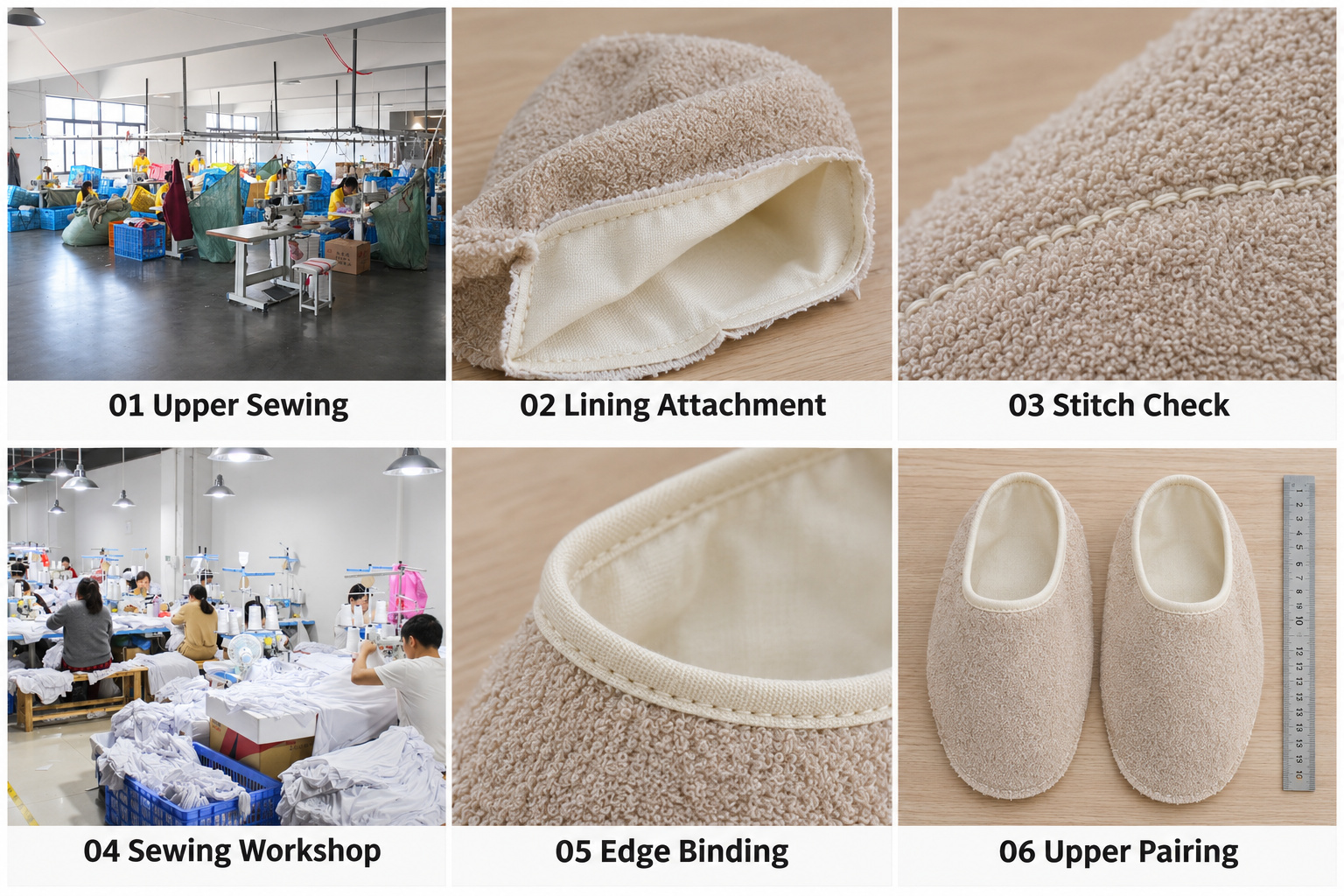
Depending on the design, sewing may join upper sections, secure lining, prepare textile straps or form the vamp. Stitch placement, seam allowance and thread tension influence shape, appearance and seam integrity.
Relevant checks include skipped stitches, open seams, puckering and uneven joins. Lining should sit correctly without unwanted folds or exposed rough edges. Thick pile may need particular attention around seams so trapped fibers do not distort the intended finish.
Branding that requires access to flat components should be coordinated before the upper is closed or assembled.
Finish Edges and Check Upper Dimensions
Binding or other agreed edge treatments should follow the approved construction. Uneven tension can draw an opening inward, while bulky joins may affect appearance or contact areas.
Completed uppers are checked for shape, opening dimensions, seam appearance and pair consistency. Compare them with the approved reference before attachment to the footbed or sole. Our assembly and finishing page covers the next stage for applicable constructions.
 Approve Changes Before Bulk Sewing
A revised opening, wider upper or thicker lining may require pattern adjustment and another sample review. Confirm which sizes need physical approval before releasing the assortment.
During slipper sample development, record the accepted materials, pattern version and finishing details. These references support production checks; photographs alone may not resolve fit or internal construction questions.
Review Order Quantities and Production Timing
Material minimums, color splits, size assortments and sewing complexity affect the applicable MOQ, cost and schedule. Additional panels, binding details or material changes can alter preparation and sewing time.
Packing requirements also matter when prepared uppers move between operations. Components should remain identifiable and protected from unnecessary crushing or soiling.
Send your reference style, upper and lining requirements, size breakdown and estimated quantities. Include branding, inspection expectations and target timing so we can review the cutting and sewing scope before confirming production conditions.