


Define the Fit Your Buyers Need
Soletrivo Slippers supports importers, wholesalers, private label brands and hospitality buyers reviewing size and shape requirements for bulk orders. Development is assessed by style, from hotel slippers and textile indoor footwear to slides, sandals and flip flops.
Start with your target market, required size range and a fit reference. An existing model may suit your program, while changes to upper coverage, footbed dimensions or sole shape require further review before sampling and quotation.
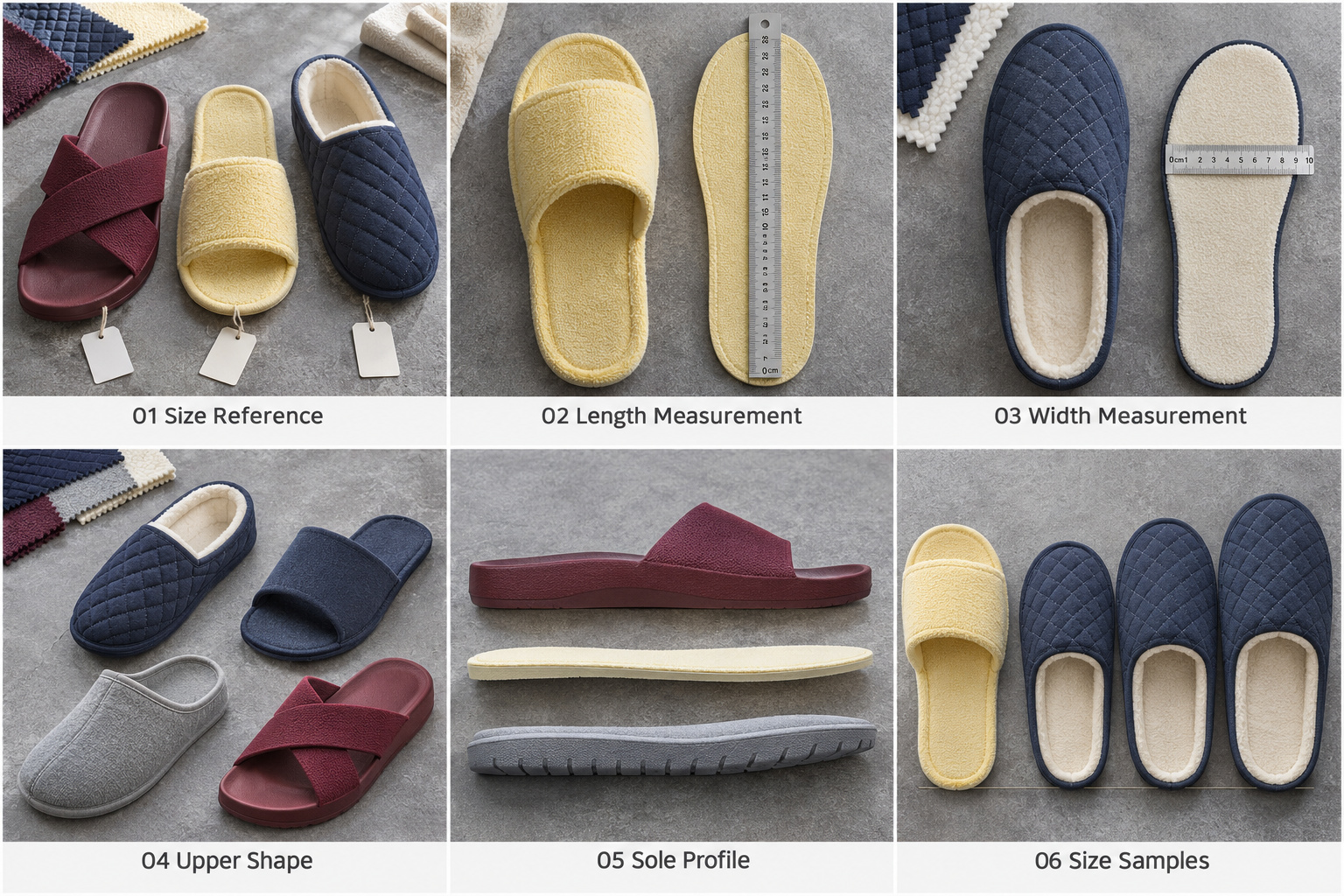 Confirm Measurements Before Size Labels
EU, UK and US size labels need an agreed measurement reference. The same nominal size can fit differently across constructions, particularly when lining thickness, toe shape or upper coverage changes.
Specify whether measurements refer to the outsole, footbed or usable internal space. Confirm length, forefoot width and relevant opening dimensions using consistent measurement points. For hospitality programs using grouped sizes, agree the actual dimensions and intended fit range rather than relying only on labels such as medium or large.
Review Upper Openings and Overall Shape
Fit depends on more than length. Strap width, vamp position, toe opening and upper volume affect how securely the slipper sits on the foot.
For sewn styles, adjustments may involve revised cutting patterns, seam allowances or lining dimensions. Molded slides and related constructions may require changes to components or tooling. A wider sole alone does not necessarily create a wider fit if the upper remains unchanged. Our custom slipper design review considers these connected details before development proceeds.
Assess Sole Profiles and Tooling Requirements
Existing sole sizes and profiles should be checked first. They may provide a suitable foundation without developing new components.
Changes to outline, thickness, footbed contour, tread or attachment points can affect component compatibility and the production route. New tooling requirements, charges and availability are assessed for the proposed construction. Review the applicable sole production and bonding details when shape changes also affect upper attachment or assembly.
Check Representative Sizes Before Approving the Range
An approved sample in one size does not establish fit across the complete assortment. Agree which representative sizes need physical review and how dimensions should progress between them.
Review the proposed range with the intended upper, lining and cushioning, since material substitutions can alter internal space. During slipper sample development, record measurement results, fit comments and revisions against the correct sample version. Confirm the required approvals before releasing the size range for production.
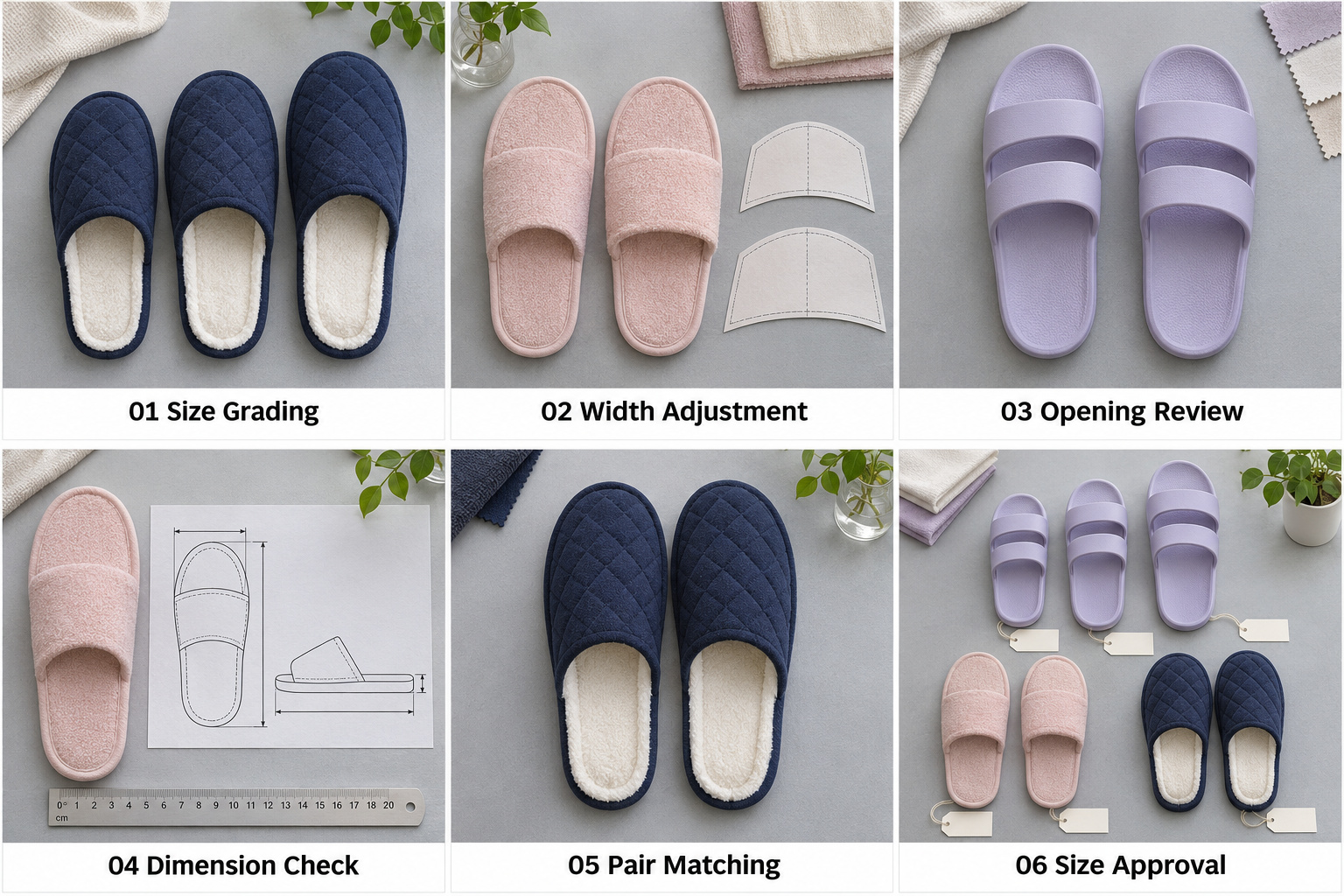 Plan Size Assortments, Inspection and Packing
Order quantities need a breakdown by style, color and size. A total quantity does not establish whether each component minimum is met. Additional sizes, revised patterns or tooling can affect MOQ, sample costs and lead time.
Production checks should use the agreed measurement method and tolerances, with size identification and pair matching included. Confirm packing ratios and box fit for the largest or bulkiest sizes so packaging protects the approved shape during shipment.
Send Your Size and Shape Requirements
Share your reference style, target market, size chart, measurement method and estimated pairs per size and color. Identify the fit or shape changes required, along with packaging and delivery expectations.
We review existing component suitability, sample requirements and development conditions before confirming the commercial proposal.